






The Fortress That Didn’t Flinch
While much of India bent under the sword of Mahmud of Ghazni, one place stood tall. Not with prayers, not with tributes—but with silence and strategy. This is a story of the defiance at Kalinjar.
This is the story of Defiance at Kalinjar—a moment in history when a fortress refused to kneel and a king refused to bribe. While Ghazni torched temples and looted gold from Mathura to Somnath, Kalinjar did the unthinkable: it said no—and survived.
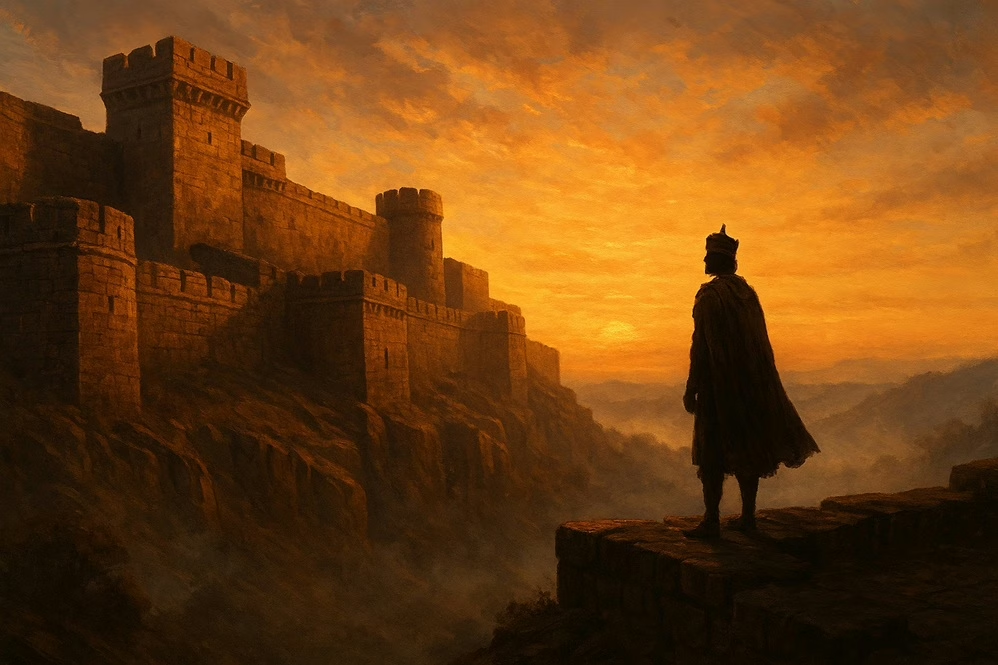
At its helm stood Raja Vidyadhara, Chandela monarch, tactician, and a man whose quiet resistance delivered Mahmud his loudest humiliation.
Kalinjar: Not Just a Fortress, a Statement
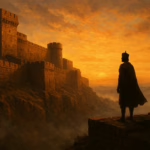
Towering above the Vindhya hills in Bundelkhand, Kalinjar Fort was no ordinary military outpost. It was a sacred, strategic, and cultural marvel. At its heart lay the Neelkanth temple, where Lord Shiva was believed to have consumed poison to protect creation. Kalinjar literally means “the destroyer of time.”
It wasn’t just stone and wall. It was symbol and strength, both spiritual and military.
To conquer Kalinjar was to claim dominion over central India—and, in Ghazni’s mind, over the idea of India itself.
Ghazni’s Raiding Playbook
By 1023 CE, Mahmud of Ghazni had already launched over a dozen raids into India. His playbook was clear:
- Strike in winter
- Target rich, unguarded cities
- Plunder temples
- Melt idols
- Retreat with gold before resistance rallied
This was how he ravaged Thanesar, Kannauj, Mathura, and Somnath.
He wasn’t a ruler. He was a raider-in-chief financed by holy justifications.
According to Tarikh-i-Yamini by Al-Utbi:
“Mahmud marched with the desire to destroy idol-worship and secure war-booty.”
But Defiance at Kalinjar threw a wrench in that plan.
The Strategic Genius of Raja Vidyadhara and the Defiance at Kalinjar
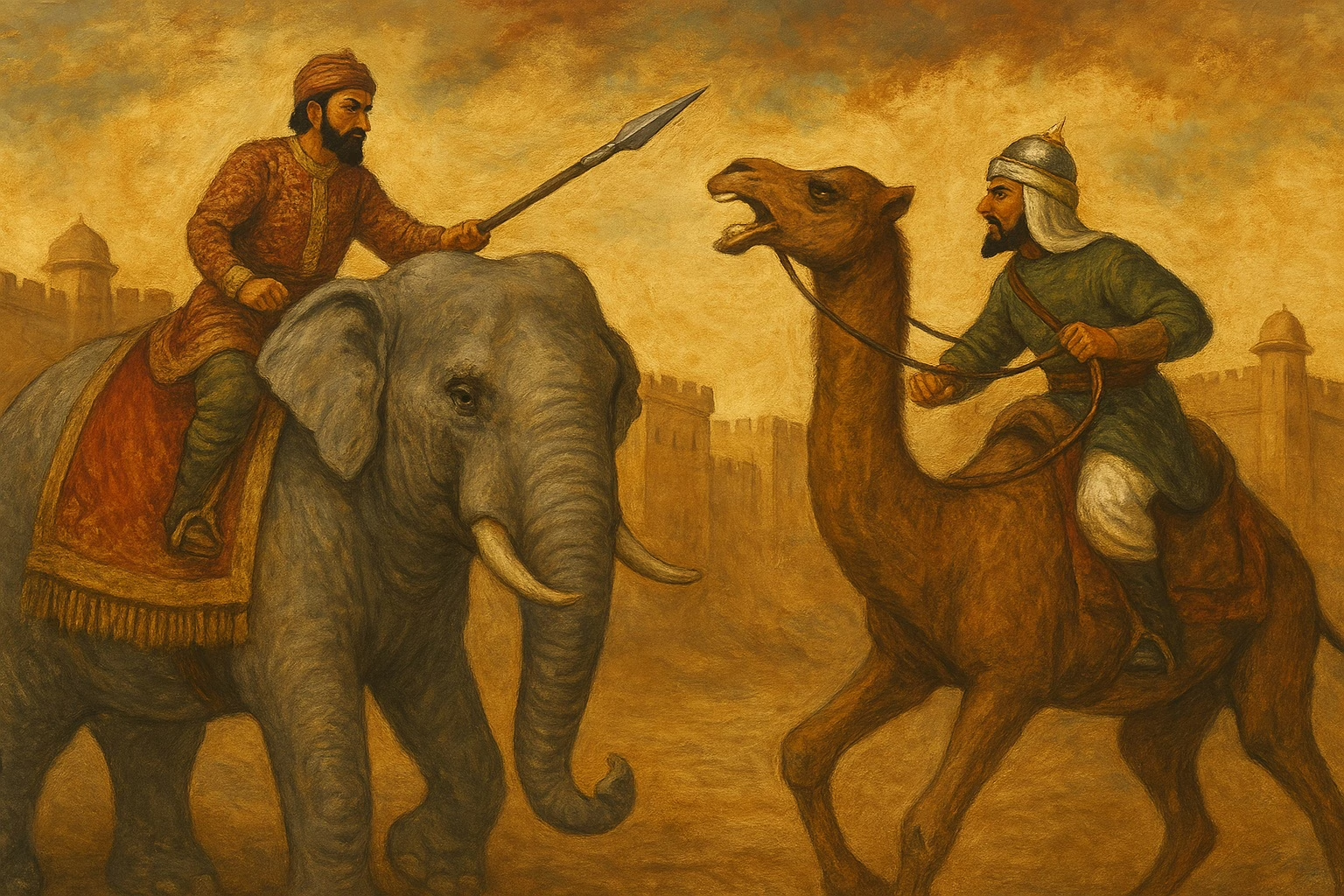
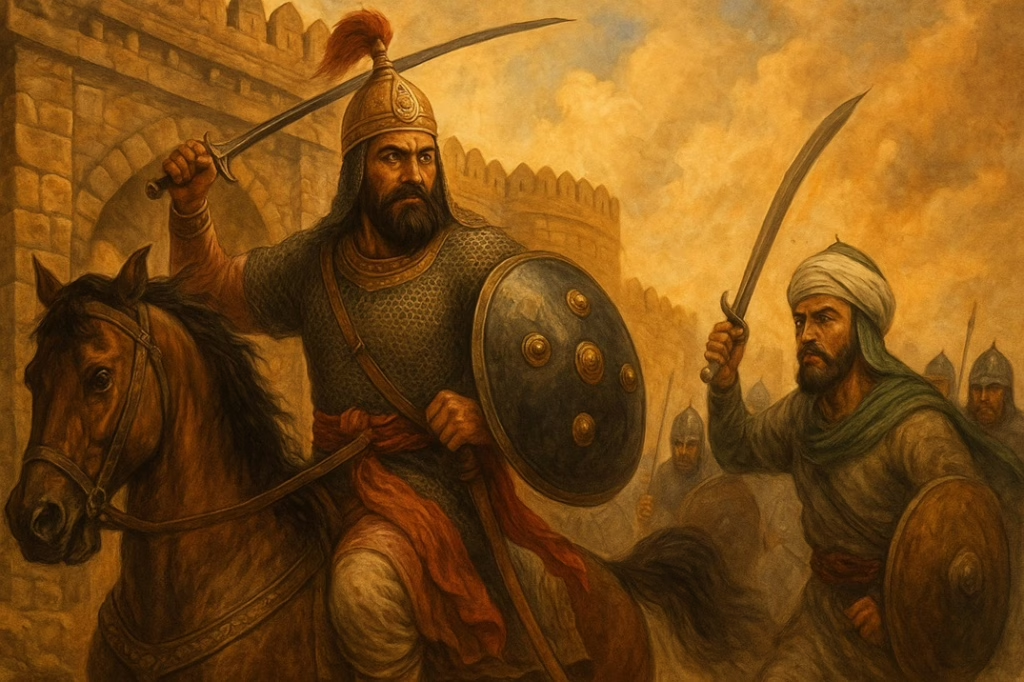
Raja Vidyadhara Chandela knew he wasn’t facing just another invading army—he was facing a master looter cloaked in divine approval.
Unlike other rulers who rushed into battle or paid tribute, Vidyadhara did three things smartly:
- He avoided direct combat on Ghazni’s terms
- He used Kalinjar’s harsh terrain and altitude to stall supplies and morale
- He offered no bait—no idol-rich temples, no disorganized defenses
The Ghaznavid army, used to fast plunder and easy collapse, found itself stuck in unfamiliar terrain with no payoff.
That silence? That lack of desperation?
It rattled Mahmud more than resistance
The Battle That Didn’t Break
Eventually, Mahmud attempted diplomacy. Yes—the same man who razed cities was offering terms.
Some records state that Mahmud “accepted tribute” from Kalinjar and left. But this contradicts both Ghazni’s boastful patterns and the absence of actual tribute details in his own chroniclers.
Most compellingly: Kalinjar was never looted, nor listed among Ghazni’s triumphs in any surviving Ghaznavid records. There was no gold. No massacre. No temple destruction.
That tells us all we need to know.
Why Defiance at Kalinjar Was a Psychological Victory
Unlike Mathura, where Mahmud reduced temples to ash (🔗 Read: Mathura in Flames), Kalinjar preserved its spirit, untouched.
And this wasn’t accidental.
- Kalinjar made conquest too costly.
- Its defenders made resistance look easy.
- And Vidyadhara made sure Ghazni returned home not with spoils—but with speculation.
That’s why Mahmud never came back.
And why Kalinjar remained a symbol of resistance long after kingdoms changed hands.
When Silence Screamed
What’s incredible about Defiance at Kalinjar is that no dramatic battle is recorded.
There were no burning towers. No crumbling temples. No field of dead horses.
And yet, Kalinjar’s refusal hurt Ghazni more than his victories helped him.
“Sometimes the sharpest swords are made of silence and stone.”
— India Insight Hub
External Sources That Document the Standoff
- Tarikh-i-Yamini by Al-Utbi – While full of Ghazni’s propaganda, it never celebrates a Kalinjar victory, which is telling.
- R.C. Majumdar (The History and Culture of the Indian People) – Asserts that Kalinjar was not conquered and praises Vidyadhara’s political foresight.
- Elliot & Dowson – Their colonial translation of Islamic chronicles confirms that Ghazni’s southern raids ended with his retreat from Kalinjar.
- Archaeological Survey of India (ASI) – Kalinjar inscriptions speak of unbroken Chandela reign post-1023 CE.
Internal Links for Contextual Power
Unlike Mathura’s trauma or Qasim’s betrayal-riddled victory, Kalinjar remained unbroken.
Quotes to Hook Your Reader
“He conquered cities, but Kalinjar conquered his ambition.”
“Not all resistance is loud. Some of it is granite, unmoved by gold or fear.”
🧘🏽♂️ Kalinjar Today: A Fortress of Memory
Today, Kalinjar still stands. You can visit it, touch its stones, walk through its silent corridors. And in that silence, hear what Mahmud couldn’t:
- The prayer that survived.
- The strategy that worked.
- The slap that echoed without a sound.
Final Thoughts: Defiance at Kalinjar Is a Blueprint for Civilizational Survival
In India’s long history of invasion, Kalinjar is the exception that proves endurance is possible.
While traitors like Moka Basayah let Qasim in, Vidyadhara closed the gates and guarded the soul of the land.
Mahmud didn’t get gold.
He didn’t get glory.
He got stone silence—and strategic rejection.
Let Kalinjar be remembered not for a dramatic war, but for a masterclass in holding the line when it matters most.
Because sometimes, saying “No” without flinching is the greatest form of resistance.